History
13
Thirteen years after the American Civil War, the U.S. Supreme Court began upholding Jim Crow segregation laws that denied African Americans the full enjoyment of their 14th Amendment rights. In Plessy v. Ferguson in 1896, the Court upheld a Louisiana law requiring separate train cars for each race, ruling that constitutional rights were not violated so long as separate facilities were equal. States and cities, especially in the South, used that decision to justify more than 400 separate but equal laws keeping Blacks apart from Whites in nearly every aspect of life, especially public schools. The Alabama Constitution of 1901 required separate schools for Black and White children, and Birmingham public schools followed that rule, with schools for Blacks always worse. For decades after slavery ended, many Blacks were confined to low-paying service work such as housekeeping or driving delivery trucks, while Black men in Birmingham did the hardest, dirtiest, and most dangerous work in steel mills and coal mines. Those who could not find work could be arrested for vagrancy and forced into cheap labor for local industries. Without a good education, African Americans could not advance far in society.
Hear stories like this as you drive
ExploreHere reads historical markers out loud as you pass them: over 325,000 stories across the US. No account needed.
4.7 · 800+ ratings · Free
FIND IT
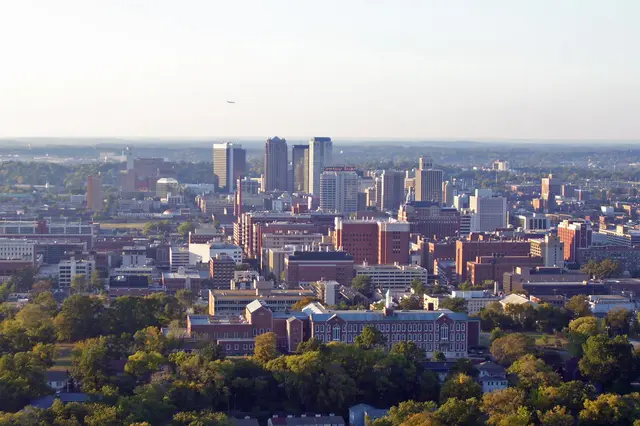
Birmingham, Alabama · United States