Transportation
4
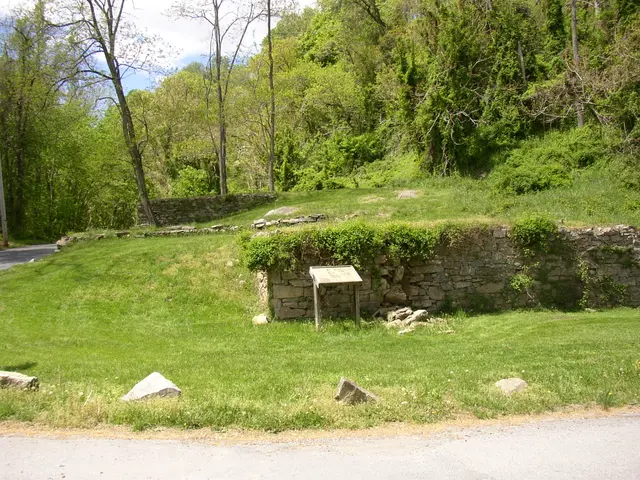
Canals moved through the landscape by taking periodic vertical steps between long stretches of flat water, and locks lifted or lowered barges between those levels. At this lock, the vertical step was 12 feet. Its hand-operated mitre gates were simple in concept but demanded close attention and experience. A boatman approaching would sound an alarm a half to a quarter of a mile away to alert the locktender. Entering the lock was the most demanding part of canalling because canal boats were usually built to fill as much of the lock as possible, leaving only inches to spare. The helmsman had to keep the boat moving fast enough to go all the way in, yet stop it before it struck the gate at the far end; if the boat hit the lock walls, it could damage the walls or even sink. Such crashes were a major cause of canal damage, especially when boatmen raced each other to reach the lock first. As the boat entered, a crewmember jumped ashore and wrapped a rope around a snubbing post next to the lock to stop the boat. This also required skill, because a rope pulled too tight could send the boat into the side of the lock or snap the post and drive the boat into the far gate, while a rope too loose would also let the boat crash into the gate. Once the boat was snubbed into place, the locking process began and generally took about ten minutes: the upper sluice valves were opened to raise the water in the lock to the level of the upstream canal, the upper gates were opened and the boat entered, the upper gates and their sluice valves were closed, the sluice valves in the lower gates were opened to empty water from the lock, the boat was lowered as the water fell to the level of the downstream canal, and the lower gate was opened so the boat could proceed on the lower level.
Hear stories like this as you drive
ExploreHere reads historical markers out loud as you pass them: over 325,000 stories across the US. No account needed.
4.7 · 800+ ratings · Free
FIND IT
Havre de Grace, Maryland · United States