Science & Tech
3
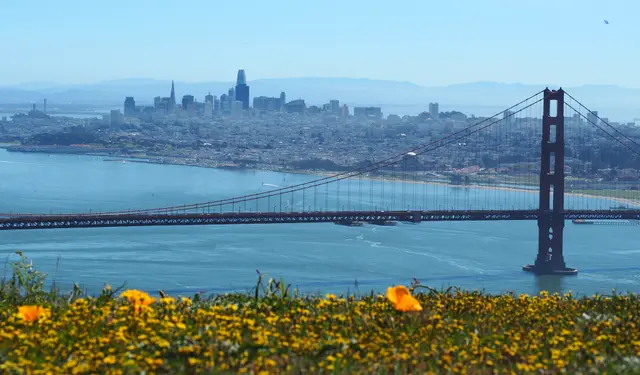
By mid-1935, the north and south towers stood ready to support the two main cables of the Golden Gate Bridge. Each cable measured a little over 3 feet, or 1 meter, in diameter and weighed 12,000 tons, making them too heavy to carry across the Golden Gate Strait on barges and lift to the tops of the towers. Instead, they were constructed high in the air by cable spinning, a process invented by John A. Roebling in the 1800s, and the company he founded made the bridge's cables. Workers pulled a wire about as thick as a pencil from the concrete anchorage at one shore, up and over both towers, and on to the other anchorage, then secured it and sent it back. Many back-and-forth trips placed the 27,572 wires in each cable, after which individual wires were grouped into heavier strands and compacted together to form the finished cable. Spinning the cables took just six months and nine days, setting records for speed and efficiency, and the two completed cables then made it possible to suspend the entire weight of the roadway deck crossing the Gate, which is why it is called a suspension bridge.
Hear stories like this as you drive
ExploreHere reads historical markers out loud as you pass them: over 325,000 stories across the US. No account needed.
4.7 · 800+ ratings · Free
FIND IT
San Francisco, California · United States