Transportation
3
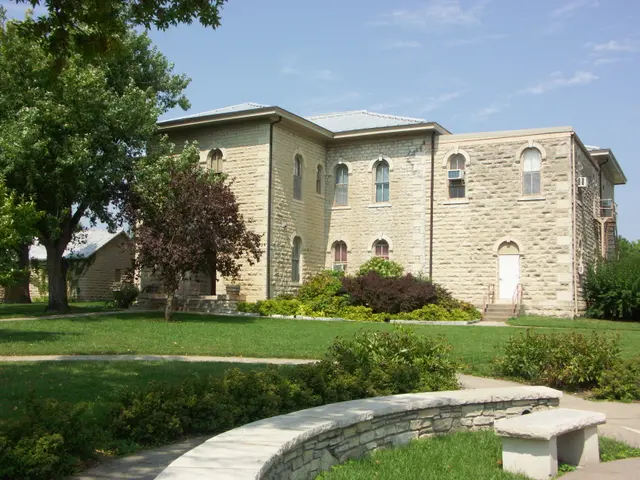
Westmoreland developed along an Oregon Trail route that followed an old Kanza hunting trail, first known here from William Sublette’s westbound wagon train in 1827, and became part of the great overland migration after John C. Fremont’s 1842 expedition report helped guide the many emigrants who followed. The area’s abundant water and rich prairie grass sustained exhausted travelers on foot and by wagon, and after the California gold discovery in 1849, wagon trains carrying thousands of people and animals sometimes camped here for weeks. As railroad completion and the approach of civil war brought Oregon Trail traffic to an end, some travelers remained, drawn by the same grass and water. John McKimens came to Kansas in 1856, married Elizabeth Wright Hazen, and moved to her late husband’s claim on Rock Creek; in 1858 he established a post office, became postmaster, and named Westmoreland after his home county in Pennsylvania. By the mid-1860s the last wagons were fording Rock Creek and the community was becoming a commercial center. Volney Baker, who had settled here in 1860, officially platted Westmoreland in 1871. A. C. and Mary Cochran, who moved to the present site in September 1869, were the first actual settlers there; he built the town’s first general merchandise store, served two terms as postmaster, added adjoining land to the town, and in 1876 built Westmoreland’s first stone house at State and Fourth Streets. Westmoreland was chosen as Pottawatomie County seat on September 22, 1882, used the Methodist church as a temporary courthouse, was incorporated two years later as a city of the third class, and then erected a new stone courthouse. By 1890, opportunities in the town supported figures such as Leonora Van Brunt, proprietor of a large dry goods and general mercantile store, stockholder in the First National Bank of Westmoreland, landowner on Main and State Streets, former postmistress for six years, and later a prosperous owner of a 160-acre farm. The town’s anticipated boom appeared in substantial, well-furnished one-story commercial buildings built with the expectation of later expansion.
Hear stories like this as you drive
ExploreHere reads historical markers out loud as you pass them: over 325,000 stories across the US. No account needed.
4.7 · 800+ ratings · Free
FIND IT
Westmoreland, Kansas · United States