Transportation
3
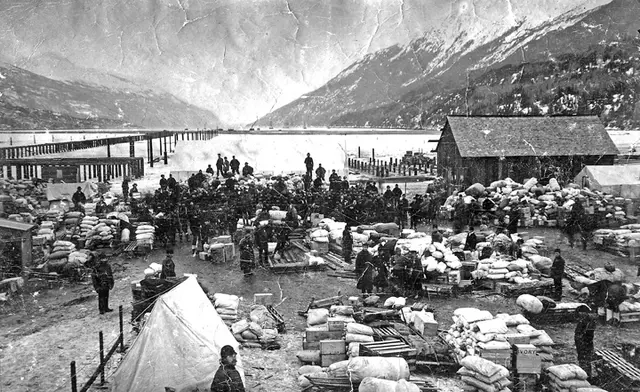
The Alaskan Coast Mountains, with precipitous peaks and massive glaciers, formed a nearly impenetrable barrier, but a few ice-free river valleys created corridors to the interior. Since prehistoric times, coastal Tlingit Natives traded extensively with the inland Tagish First Nations through the Chilkoot corridor beginning at nearby Dyea, while the White Pass corridor from Skagway was also used, though less extensively. These routes fostered trade and cultural exchange between peoples on both sides of the mountains. In the 1880s, Euro-American prospectors began using the Chilkoot Trail in search of interior gold. In 1887, Skookum Jim Mason, a Tagish man, guided Captain William Moore over the White Pass. That autumn, Moore, his son Ben, and a Tlingit helper, Nan Suk, began building a wharf and cabin in the Skagway Valley. Seeing the valley's deep water harbor and access to the interior, Captain Moore expected northern gold discoveries and aimed to benefit from the hoped-for rush of newcomers. Ben Moore filed a 160-acre land claim, and father and son began laying the foundation of what became Skagway, the gateway to the interior.
Hear stories like this as you drive
ExploreHere reads historical markers out loud as you pass them: over 325,000 stories across the US. No account needed.
4.7 · 800+ ratings · Free
FIND IT
Skagway, Alaska · United States