History
1
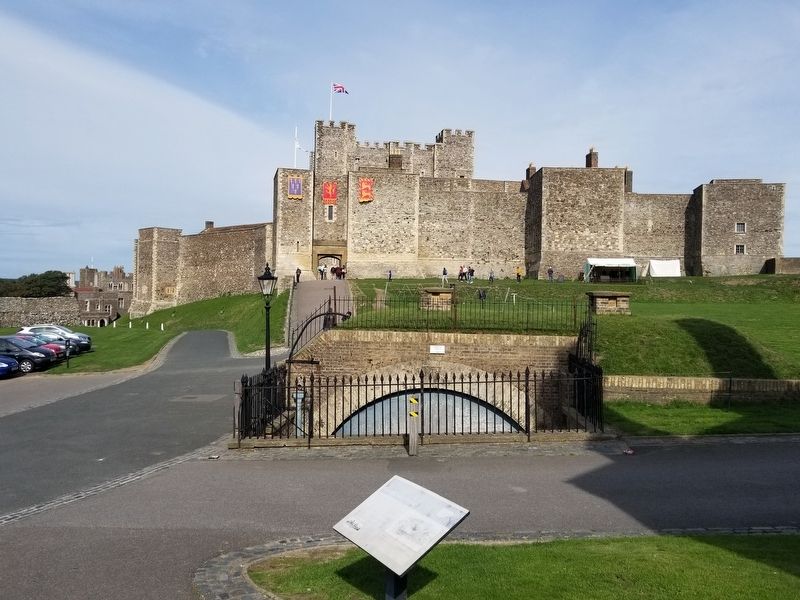
People occupied this hill more than 2,000 years ago, as much as 1,200 years before Dover Castle was first built. The huge earthworks of the castle outer bailey probably began as the ramparts of an Iron Age hillfort, constructed long before the Roman conquest in AD 43. Two ancient buildings on the hill are much older than the castle: the pharos, one of two lighthouses flanking Dover town, and the Anglo-Saxon church of St Mary-in-Castro beside it. From around AD 120, the pharos guided ships into the harbour, where there was a fortified base for the galleys of a Roman fleet. The church was built around the year 1000 inside a fortress from which defence against Viking raids was organized, and the pharos was later adapted as a bell tower for the church. The bank and stone wall around the buildings were built in the 13th century, replacing defences erected at the time of the Norman Conquest in 1066. The Roman pharos is one of the most unusual surviving structures from Roman Britain, and the church of St Mary-in-Castro is the finest late-Saxon building still standing in Kent.
PHOTOS
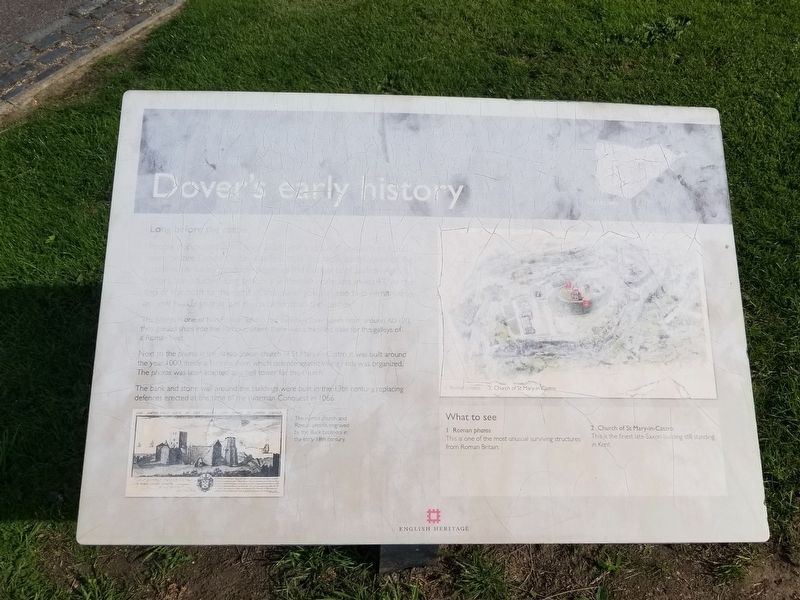
Photo: Michael Herrick
FIND IT
NEARBY MARKERS
© 2026 MainEngine