History
4
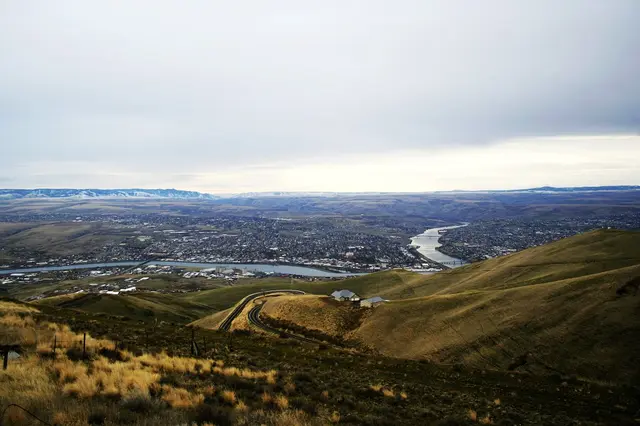
Along the Snake River, the earliest writings were petroglyphs carved into rock, including examples at Buffalo Eddy and Captain John sites about 20 miles upriver, some four to six thousand years old, many showing hunting scenes with bighorn sheep, elk, and deer, and human figures with spike-horned headdresses, triangular bodies, bows, or hunting atlatls. The region was also shaped by immense floods: beginning about 17 million years ago, basaltic lava inundated the Columbia basin, followed by waters released from a ruptured Lake Bonneville in northern Utah about 15 million years ago, whose gravels underlie much of Lewiston, and later by the failure of the ice dam holding back Lake Missoula, which sent water westward until it backed up at Wallula Gap and reached the Lewiston-Clarkston Valley. The first English words written along the Snake River were composed on the night of October 10, 1805, when the Lewis and Clark Expedition camped on the river's north side and William Clark recorded the scarcity of timber near the forks and upstream. In 1862, Lewiston's first newspaper, The Golden Age, published an account of three men who traveled from Lewiston up the Snake River to Fort Boise and returned, concluding that they had found nothing in the river to impede navigation, a judgment later generations of steamboat captains, jet boaters, and rafters might dispute.
Hear stories like this as you drive
ExploreHere reads historical markers out loud as you pass them: over 325,000 stories across the US. No account needed.
4.7 · 800+ ratings · Free
FIND IT
Lewiston, Idaho · United States