Industry
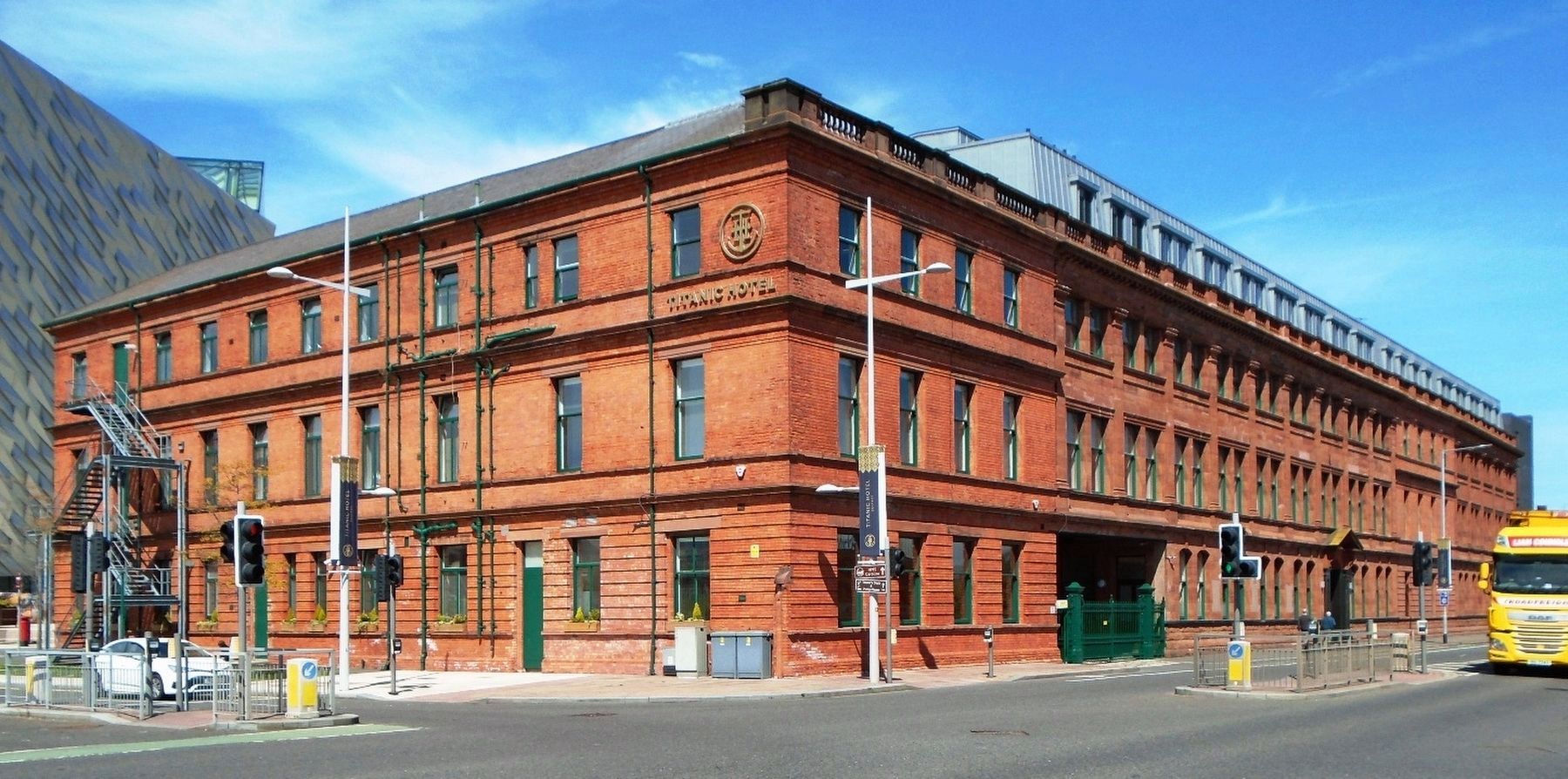
This long three-storey sandstone and brick office building served as the headquarters of Harland and Wolff, one of the world's greatest shipbuilding companies at its peak in the early to middle years of the 20th century, when it employed 50,000 people in the UK, including 30,000 in Belfast, and within its walls plans and designs were prepared for ships including Olympic, Canberra, and Titanic. Harland and Wolff's history was closely bound to Queen's Island, a man-made island created after Belfast Harbour Commissioners appointed William Dargan to excavate a low-water channel from Dunbar's Dock to the first bend in the River Lagan, giving large sailing ships access to the port; completed in 1841, the excavated material formed the 17-acre island. In 1843 the commissioners began laying out the northern part of Queen's Island as a People's Park with a crystal palace, a zoo, and a regular ferry service from Co. Antrim, while the south and east were developed for shipbuilding, including a 1000-ton slipway built in 1849. The first iron shipbuilding yard on Queen's Island was opened by Robert Hickson in 1853, and in December 1854 he employed Edward Harland as general manager; Harland bought the business for £5,000 in 1858, and three years later entered partnership with Gustav Wolff, forming Harland and Wolff. Constructed between 1900 and 1919 as the company's administrative and drawing office centre, the building remained in use by Harland and Wolff until 1989. At the time it was built, the company's chairman was Lord Pirrie, who had joined as a gentleman apprentice in 1862 at age 15, became a partner in 1874, and became chairman after Harland died on Christmas Eve 1895. Under his tenure the company expanded from occupying 1.5 acres and employing 100 men in 1854 to occupying 80 acres and employing 10,000 men by 1897. Pirrie developed strategic relations with the White Star Line, and the concept for the Olympic-class liners, Olympic, Titanic, and Britannic, is said to have emerged during an after-dinner discussion with its chairman, Bruce Ismay. The oldest parts of the headquarters building, the two former drawing offices at the rear, are most closely associated with producing both concept designs and detailed construction drawings for the White Star Line ships Olympic and Titanic. The chief designer at that time was Thomas Andrews, Pirrie's nephew, who sailed on Titanic on her maiden voyage from Southampton to New York and died assisting people into lifeboats after the ship struck an iceberg. It is said that Pirrie's hair turned white overnight after the Titanic disaster, and he carried through life a small book of maxims given by his mother when he began work at Queen's Island.
PHOTOS
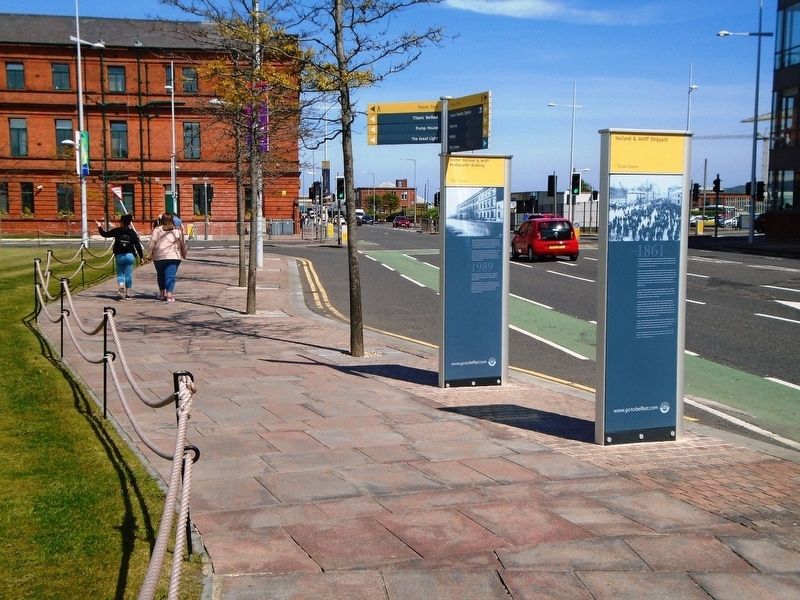
Photo: William Fischer, Jr.
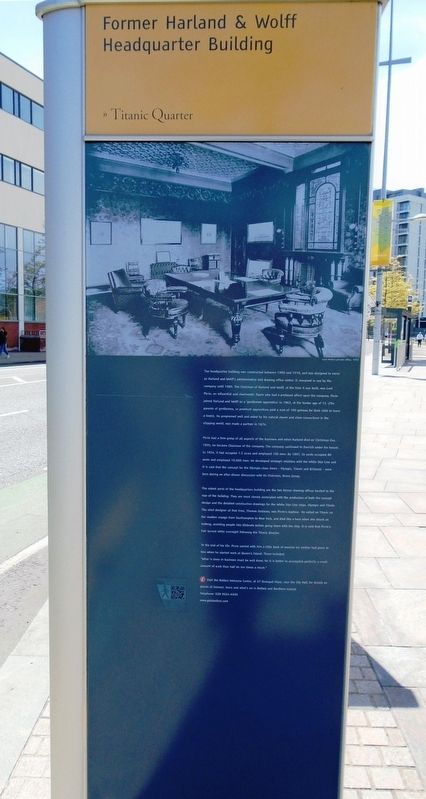
Photo: William Fischer, Jr.
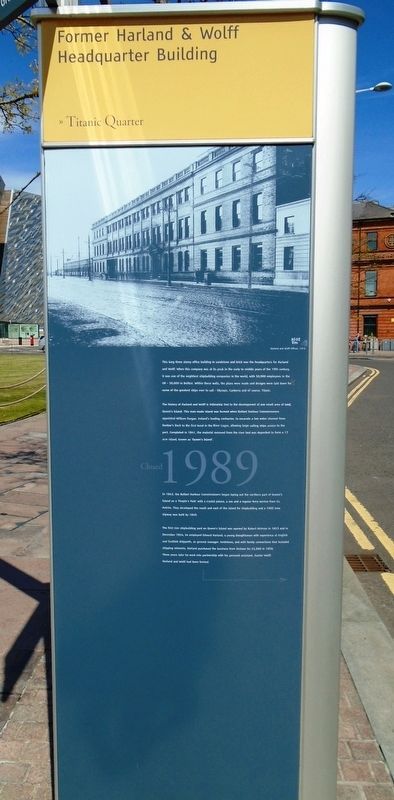
Photo: William Fischer, Jr.
FIND IT
NEARBY MARKERS
© 2026 MainEngine