Industry
2
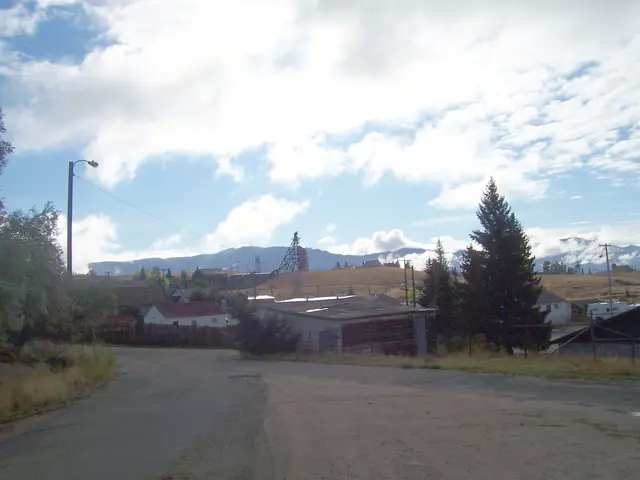
Butte's underground mines produced over $51 billion in mineral wealth from a seven-square-mile hill often called "the richest hill on earth," with at least 512 mines, more than 10,000 miles of tunnels and shafts, over 49 miles of vertical shafts, and workings that made Butte known as a city "a mile high and a mile deep." More than 2,300 men died instantly or within days from mining accidents, not counting thousands more who died from chronic illness, injury, or related industries. The Baltic Mine claim, patented on 08-07-1881, included Butte's first smelter, first iron foundry, first stamp mill, first high school, and one of its first mines, while the later Silversmith Mine, built in the mid-1940's, like the Baltic, was a small two-man operation that failed for lack of capital after hitting water at 180 feet. Mining in Butte succeeded in the late 19th century only through enormous outside investment, chiefly from Boston bankers and the Hearst fortune in San Francisco, so although Butte produced more wealth per person than any other city in the world before 1900, much of that wealth left the city to repay investors. Butte also had more ore-crushing stamps than any other city, with 375 before copper displaced gold and silver as the major mined metal and stamp mills declined. One such ten-stamp operation, the Old Lexington Stamp Mill, erected by Charles Hendrie, produced over $45 million in today's money during 12 years of operation before a newer 40-stamp mill replaced it in 1882; it had been shipped from Chicago to St. Louis, barged to Fort Benton, hauled by ox cart to mining camps and eventually to Butte, and last ran in 1955 in Pony, Montana, crushing tungsten ore. Butte's first smelter, the Ramsdell, built in 1866, failed repeatedly despite being moved twice, yet still yielded copper and hidden silver recovered from its slag before Charles S. Warren found about 1,000 pounds of copper while tearing it down. Mining wealth also transformed education in Butte: by 1887 the city had one of the nation's best school systems and highest-paid teachers, its first high school opened in 1886, student numbers rose with mining activity from 7 in 1874 to over 7,000 in 1889, and after underground mining caused the first building to crack in half in 1913, the replacement Washington School was built with an exceptionally strong reinforced concrete foundation.
Hear stories like this as you drive
ExploreHere reads historical markers out loud as you pass them: over 325,000 stories across the US. No account needed.
4.7 · 800+ ratings · Free
FIND IT
Butte-Silver Bow (balance), Montana · United States