History
7
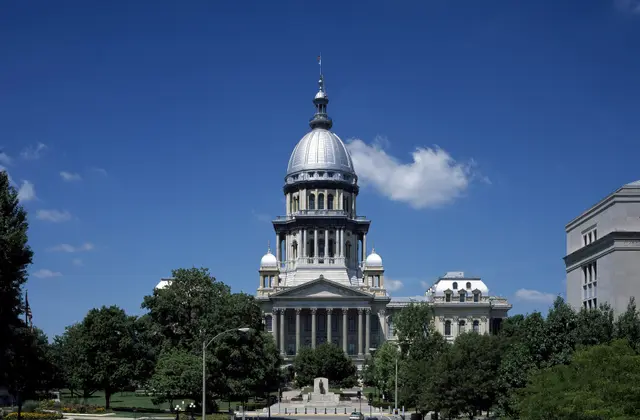
Lincoln's funeral train arrived at the Chicago & Alton Railroad station on Jefferson Street at 8:40 A.M. on May 3, 1865, after carrying his body more than 1,600 miles, as vast crowds filled Springfield for the final ceremonies. The Veteran Reserve Guard of Escort removed the president's body, and a long procession moved through Jefferson, Fifth, Monroe, and Sixth streets to the Statehouse, where his remains lay in repose. Although officials first planned a three-day public viewing, the condition of the remains after the long journey led them to shorten the viewing and move the burial to May 4, 1865. On that morning, the final procession left the Statehouse, wound through the crowds, and went to Oak Ridge Cemetery. Lincoln's horse, Old Bob, caparisoned in black and led by the Reverend Henry Brown, followed directly behind the hearse, helping establish the riderless horse as a tradition in future presidential state funerals, while African-Americans were placed at the rear of the procession. During the twenty-four hour viewing at the Statehouse, an estimated 75,000 mourners passed in single file by the coffin, which rested on a specially constructed catafalque in the Hall of Representatives, and the occasion remained peaceful and orderly. The funeral car carrying Lincoln's remains, the United States, had been built by the United States Military Railroads for the president's private use but was instead renovated for mourning, with an officer's car attached and a train of seven to nine additional cars supplied by railroad companies, while a pilot engine ran ten minutes ahead. After Lincoln's assassination plunged the victorious North into national mourning, the government debated his burial place and cities across the North sought to host the funeral. When Mary Lincoln insisted on Springfield, Secretary of War Edwin Stanton and his subordinates planned a route roughly following the inaugural journey, with Chicago included and Pittsburgh and Cincinnati omitted. At twelve major cities beginning with Washington, D.C., the remains were taken from the train, carried in grand processions, and laid in repose for public viewing in what became America's first great state funeral and set many precedents. Henry P. Cattell embalmed Lincoln's remains at the White House under Stanton's authority using zinc chloride injected through the femoral artery, a relatively new procedure in the United States that Lincoln had encountered before when Cattell prepared the body of Willie Lincoln in 1862, and the funeral helped introduce embalming to vast numbers of Americans who viewed the president's remains along the route.
Hear stories like this as you drive
ExploreHere reads historical markers out loud as you pass them: over 325,000 stories across the US. No account needed.
4.7 · 800+ ratings · Free
FIND IT
Springfield, Illinois · United States