Science & Tech
1
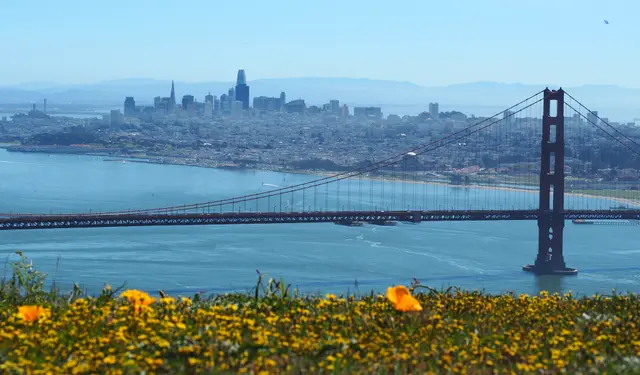
The Golden Gate Bridge rarely has to withstand earthquakes or strong wind, but every day it faces corrosion of its steel, an alloy made principally of iron with small amounts of elements such as carbon or nickel. When steel is exposed to oxygen in air and to water, the iron changes through corrosion and creates rust, which erodes the steel and makes it slightly smaller and weaker. On the bridge, the steel sections were originally oversized in anticipation of corrosion and other threats. Water vapor from the ocean surrounds the bridge and often cools and condenses into fog, and corrosion is accelerated by salt carried in the sea air. In the 1930s the bridge’s original primer paint was two-thirds by weight lead, which helped prevent rust but was harmful to people and the environment. Today, different areas of the bridge are repainted about every ten to twenty years, and because of environmental concerns the primer now contains zinc instead of lead. Zinc protects the steel because it corrodes more easily than steel, serving as a sacrificial metal so the steel does not rust when zinc is present. Over the zinc primer is a top coat in the bridge’s signature color, International Orange. Other color schemes were considered when the bridge was built, including a striped design proposed to make it more visible to ships and airplanes. When the protective paint layer peels or cracks, steel is exposed to oxygen and water, which initiates corrosion, so maintenance must remove rust down to bare steel before primer and top coats are reapplied.
Hear stories like this as you drive
ExploreHere reads historical markers out loud as you pass them: over 325,000 stories across the US. No account needed.
4.7 · 800+ ratings · Free
FIND IT
San Francisco, California · United States