History
3
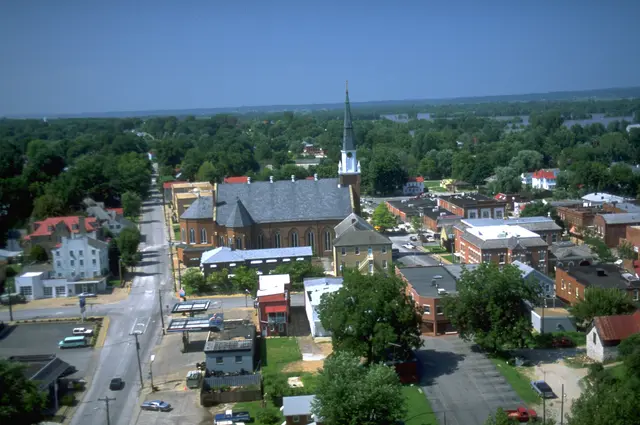
On Dec. 4, 1803, a flotilla commanded by William Clark passed this site early in the morning as he brought a 55-foot keelboat, two pirogues, and smaller boats up the Mississippi to rendezvous with Meriwether Lewis after a four-day layover at the newly founded outpost of Fort Kaskaskia. Aboard were Clark, York, and about 23 men who would soon be enlisted in the Pacific-bound Corps of Discovery, while the visit to Kaskaskia had added 12 new recruits and needed supplies. Lewis had gone on horseback to Cahokia, Illinois, to attend to urgent business across the river in St. Louis, while Clark led the slower boats, which had left Kaskaskia late the previous day, traveled three miles, and camped after dark on the west bank near the Grand Champs common field. Before sunrise on December 4, the party set out, soon passed the mouth of Gabia, or Gabouri, Creek, which Clark knew as the landing place for the relocated town of Ste. Genevieve, and observed a high bluff and a cave in the cliff above the river. Later that day, about 16.5 miles into the journey, they passed the ruins of Fort Chartres, built by the French in 1721 and destroyed by the British in 1772, and at 19.25 miles they camped at the lower point of an island. Clark recorded that Ste. Genevieve, lying on rising ground away from the floodplain, contained about 120 principally French families, and he already knew the village from earlier travels, including a 1797 stay at the home of Francois Valle. He also knew the settlement had been moved from flood-prone old Ste. Genevieve, nicknamed misar, or misery, to the higher banks of Gabouri Creek after disastrous floods beginning in the mid 1780s.
Hear stories like this as you drive
ExploreHere reads historical markers out loud as you pass them: over 325,000 stories across the US. No account needed.
4.7 · 800+ ratings · Free
FIND IT
Ste. Genevieve, Missouri · United States