Arts & Culture
6
Locomotive engineers, sometimes called “labor’s aristocracy,” were the highest paid workers on the railroad, and that income gave William Kelly, an engineer for the Milwaukee Road, the means to purchase this one-story home. In 1920, he lived here with his wife, Nellie, their three-year-old son, and his wife’s sister. Building contractor Carl Anderson constructed the residence in 1917 and almost certainly took the design from a pattern book, part of a wider practice that brought current architectural fashions to relatively isolated communities such as Miles City. A classic Craftsman style bungalow, the house features a low-pitched roof, exposed rafter tails, wide overhanging eaves, and a full-length front porch that is now enclosed. Its distinctive roofline was inspired by Japanese architecture, which Japan had widely promoted through the 1893 Columbian Exposition and the 1904 St. Louis World’s Fair, leading architects to incorporate Japanese elements into residential designs. Anderson appears to have favored the exotic effect of flared eaves and molded gable peaks, and he built several other Miles City bungalows with similar pagoda-style roofs.
Hear stories like this as you drive
ExploreHere reads historical markers out loud as you pass them: over 325,000 stories across the US. No account needed.
4.7 · 800+ ratings · Free
FIND IT
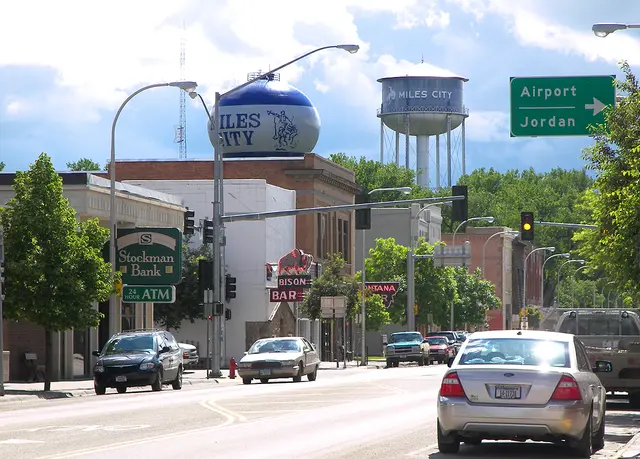
Miles City, Montana · United States