Industry
8
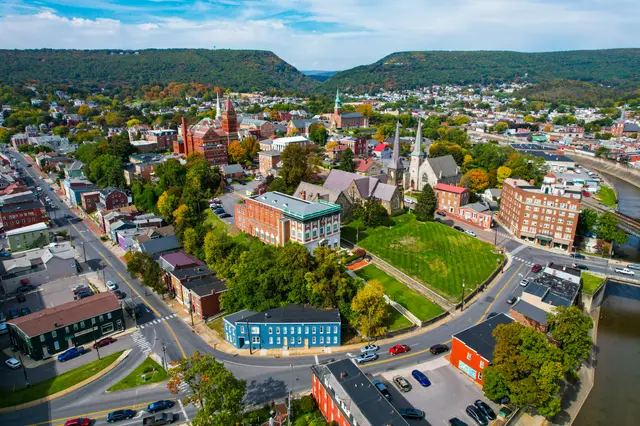
The Chesapeake and Ohio Canal was planned to link the Potomac River and Chesapeake Bay with Pittsburgh and the Ohio River Valley. Construction began at Georgetown in 1828, but by 1850 only 184 of the 365 miles were complete. Financial difficulties, construction delays, and competition from faster, more efficient railroads halted new construction, leaving Cumberland as the canal’s western terminus. The city became a hub of trade as lumber, coal, grain, and produce were shipped by canal to Georgetown, while finished products and store goods returned on the trip back. At Cumberland, the canal and its basins formed an extensive water system. Railroads brought coal from the mountains of Pennsylvania and West Virginia to the city’s wharves, where it was loaded into boats. Teams of two or three mules pulled canal boats with 100-foot tow lines at 4 miles per hour, and relief teams were stabled on board. Boats could carry up to 126 tons, and more than 500 boats navigated the canal at its peak in the 1870s. All C&O boats were built in Cumberland’s boatyards, where repairs were made during the boating season and boats were caulked and repainted in the fall. Typical canal boats were 92 feet long and 14.5 feet wide, built to fit locks measuring 98 feet by 15 feet. After a destructive flood in 1924, canal operations ceased, and later much of the area was filled in for industrial use.
Hear stories like this as you drive
ExploreHere reads historical markers out loud as you pass them: over 325,000 stories across the US. No account needed.
4.7 · 800+ ratings · Free
FIND IT
Cumberland, Maryland · United States