Science & Tech
2
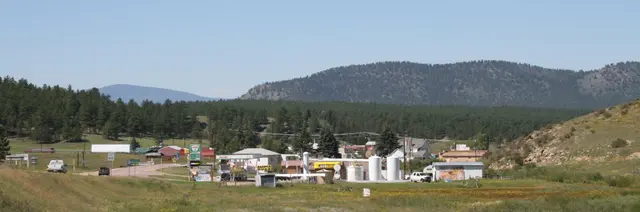
About 34 to 35 million years ago, during the Eocene, the Florissant valley had a year-round mild climate in the Rockies and supported a diverse warm temperate forest of several conifers and numerous broad-leaved plants, along with more than a thousand species of insects. Mammals were emerging as the dominant land animals, and prominent forms in the valley included brontotheres, rhinoceros-like browsers, and Mesohippus, a three-toed browsing horse. Tsetse flies probably plagued these mammals, and Hollickwood, an extinct member of the beech family, was common there. Fossils showing the attachment of reproductive structures to foliage allow scientists to reconstruct Hollickwood's appearance. With global cooling at the end of the Eocene, this community changed drastically as some organisms became extinct, others adapted, and still others dispersed to warmer climates. The high-elevation Guffey volcano probably dominated the region much as Pikes Peak does today, and mudflows from the volcano followed ancient stream drainages and eventually blanketed the Florissant valley.
Hear stories like this as you drive
ExploreHere reads historical markers out loud as you pass them: over 325,000 stories across the US. No account needed.
4.7 · 800+ ratings · Free
FIND IT
Florissant, Colorado · United States