Industry
5
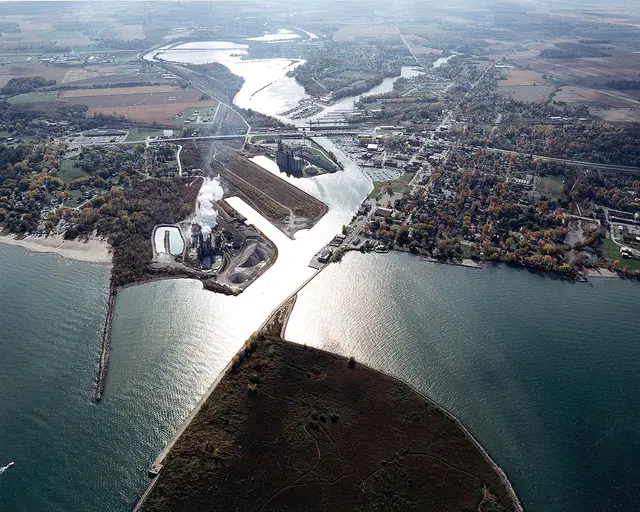
In 1882, Huron, Ohio, became the Wheeling and Lake Erie Railroad’s port on Lake Erie for shipping iron ore and coal, and for the next 100 years the docks were integral to Huron's progress and economic growth. In the early years, the docks handled coal, iron ore from mines in Michigan, and lumber arriving by ship and rail. Boats were loaded and unloaded by whirleys, small steam-powered cranes that ran on rails along the east side of the new slip, with a small boiler in a wooden cab operating a hoisting system that raised and lowered a tub; they were called whirleys because after the buckets were filled they whirled around to be emptied, and dockworkers filled and emptied the buckets by hand. The first ship loaded with coal in Huron was the sailing schooner Pelton, and the first iron ore shipment arrived in 1883 on the schooner LC Butts; 16 men used shovels and whirleys to unload 7,720 tons of ore in three days, and each man was paid $6. The first dockworkers were Hungarian immigrants who came to the United States in the 1880s and 1890s to escape political turmoil and high taxes in Hungary, followed by Italians in the 1890s and early 1900s who came because of disease, starvation, and economic crisis in Italy. Dock work was dirty, strenuous, and dangerous, but immigrants needed jobs, and most newcomers settled on the east side of Huron within walking distance of the docks. Men from Germany, Ireland, Sweden, and England also crossed the Atlantic to seek employment there, and in the early years as many as 300 men worked in gangs of 21 to 42, paid on a tonnage basis of 14 cents a ton for both ore and coal.
Hear stories like this as you drive
ExploreHere reads historical markers out loud as you pass them: over 325,000 stories across the US. No account needed.
4.7 · 800+ ratings · Free
FIND IT
Huron, Ohio · United States