History
6
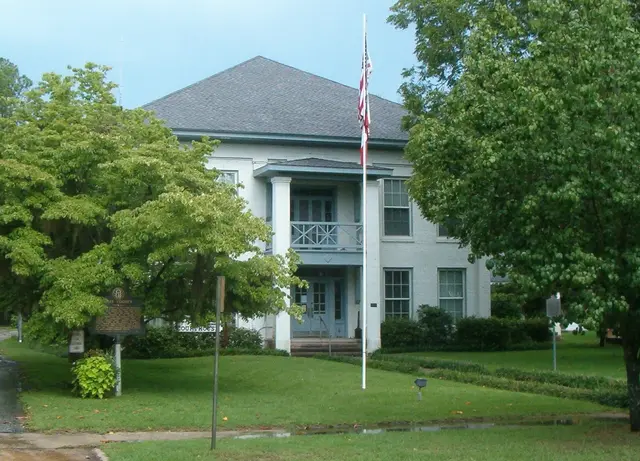
John Dill (1788-1856) of S.C., military aide to Gen. Gaines, commander of Fort Gaines, and a leading pioneer citizen, is said to have built the Dill House, called “the finest home on the frontier,” with money his wife had saved while a captive of the Indians. By hoarding and hiding paper money that her captors discarded after raids, she carried it with her when she fled to freedom. The original part of the house, now a hotel, contains elaborate mantles and intricate carvings. In 1821, Gen. Dill established a mercantile business with his partner, John W. Sutlive, and added a tannery, one of the finest harness and shoe businesses in the South, a brick kiln, and cotton warehouses to his interests. He and his wife are buried in a cemetery on Carroll Street. A live oak tree with a circumference of 16 feet was brought from Florida and planted by Gen. Gaines. Globe Tavern, first operated by Charles Suddoph at the northwest corner of Washington and Carroll Streets, used a brass globe at its entrance to show that the tavern, “the most popular in SW Georgia,” was open and ready to refresh the traveler. After the tavern burned, the globe was moved across the street.
Hear stories like this as you drive
ExploreHere reads historical markers out loud as you pass them: over 325,000 stories across the US. No account needed.
4.7 · 800+ ratings · Free
FIND IT
Fort Gaines, Georgia · United States