History
5
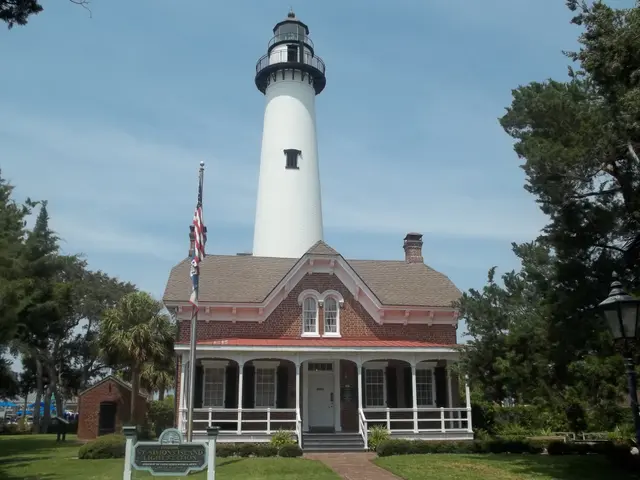
Along Georgia's coastal sea islands, the Spanish established several missions, including two on St. Simons Island, which they called Isla De Guadalquini: Santo Domingo de Asajo for the Guale and San Buenaventura de Guadalquini for the Mocama. San Simon and Ocotonico were Yamasee villages that did not convert to Christianity. These missions and villages declined after raids by Chichimeco Indians from Georgia's interior and later by pirates in 1684. After the Spanish abandoned their missions, the English later established the town and fort of Frederica to the north and Fort St. Simons near the lighthouse, though Fort St. Simons was built too close to the water and was eventually destroyed by erosion. San Buenaventura de Guadalquini, occupied by 87 Mocama Indians rather than Guale, stood on the southern tip of St. Simons Island on or near the present lighthouse site through 1684. Santo Domingo de Asajo, located between Cannon's and Hampton Points from 1661 to 1684, replaced the destroyed and abandoned mission Santo Domingo de Talaje at the mouth of the Altamaha River in 1681, had an adult population of 39, and marked the southernmost penetration of the Guale Indians. San Simon, a Yamasee village whose inhabitants were also known as Clones, had 40 adults in 1675 and 17 in 1681, stood near present-day Fort Frederica, and likely gave the island its English name; many of its Yamasee sided with the English in their struggle with Spain over the Disputed Land of coastal Georgia. Ocotonio, whose exact location is unknown but was probably south of San Simon and north of San Buenaventura de Guadalquini, had 120 residents in 1675, the largest group of unconverted Indians on the Georgia coast at that time.
Hear stories like this as you drive
ExploreHere reads historical markers out loud as you pass them: over 325,000 stories across the US. No account needed.
4.7 · 800+ ratings · Free
FIND IT
St. Simons, Georgia · United States