Military
5
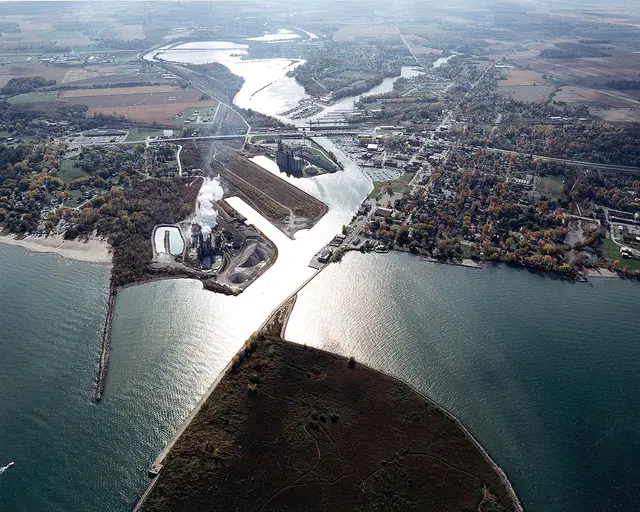
In 1812, fearing war with Great Britain and its Indian allies, many settlers left the area and local militia companies began building blockhouses for refuge. Victims of Indian attacks included Michael Gibbs, Daniel Buel, and five members of the Snow and Butler families. After the surrender of the Northwest Army at Fort Detroit on August 16, 1812, the remaining settlers fled south and east in panic, and the arrival on the lake shore of American prisoners, mistaken by some for British troops, worsened their flight. General Elijah Wadsworth, commanding the 4th Division of the Ohio Militia, ordered Brigadier General Simon Perkins to move troops from Cleveland to a point near the Huron River, where Camp Huron was built in an exposed position on the lake shore and later nicknamed Fort Nonsense. A new headquarters, Camp Avery, was then established near the head of navigation, and the militiamen who fought Indians in the Skirmish on the Peninsula on September 29, 1812, were sent from there. In July 1813, expecting a British attack, Colonel Richard Mentor Johnson’s Mounted Regiment established Camp Johnson near the mouth of the Huron River. The attack came on July 31, when a British fleet carried troops to Lower Sandusky, now Fremont, where they were defeated on August 2 in their assault on Fort Stephenson. After his victory in the Battle of Lake Erie on September 10, 1813, Commodore Perry transported William Henry Harrison’s army from the mouth of the Portage River to Canada, where the War of 1812 on the Ohio Frontier ended with the defeat of the British Army at the Battle of the Thames.
Hear stories like this as you drive
ExploreHere reads historical markers out loud as you pass them: over 325,000 stories across the US. No account needed.
4.7 · 800+ ratings · Free
FIND IT
Huron, Ohio · United States