Military
2
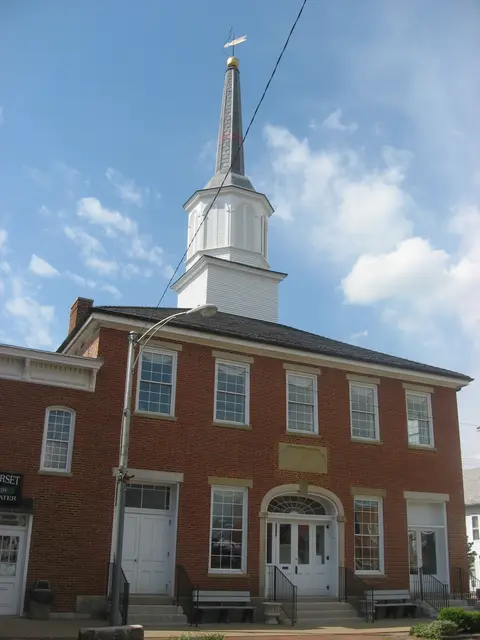
Philip Henry Sheridan was most likely born in County Cavan, Ireland, in 1831, though records do not indicate his actual birthplace. His family moved to Somerset when he was a child and lived down the avenue from this site, and later owned the house across the street. His military interest was inspired by Muster day and frequent visits from a young West Pointer named William T. Sherman. Sheridan graduated from the United States Military Academy in 1853 and served on the Western Frontier Indian campaigns prior to the Civil War. In 1862, he became Colonel of the Second Michigan Cavalry. At Stones River, Tennessee, he commanded a Division of the Twentieth Corps and stubbornly held General William S. Rosecrans' right flank, distinguishing himself in battle. At Missionary Ridge, Tennessee, his men took the impregnable heights, further proving his ability to command. In 1864, General Ulysses S. Grant brought Sheridan east, where he fought General J.E.B. Stuart's troopers to a draw throughout the summer. His Sixth and Nineteenth Corps cleared Virginia's Shenandoah Valley and defeated the forces of General Jubal Early at Winchester, Fisher's Hill, and Cedar Creek. The victory at Cedar Creek came just before the 1864 presidential election and helped assure Lincoln's reelection. Sheridan later blocked Lee's retreat at Appomattox. After the war, he served as military governor, military observer in Europe, and commander of the Division of Missouri during the Indian Wars. He became General of the Army in 1884 and died in 1888. He is buried in Arlington National Cemetery, while most of his family is buried down the street in Holy Trinity Cemetery.
Hear stories like this as you drive
ExploreHere reads historical markers out loud as you pass them: over 325,000 stories across the US. No account needed.
4.7 · 800+ ratings · Free
FIND IT
Somerset, Ohio · United States