Transportation
2
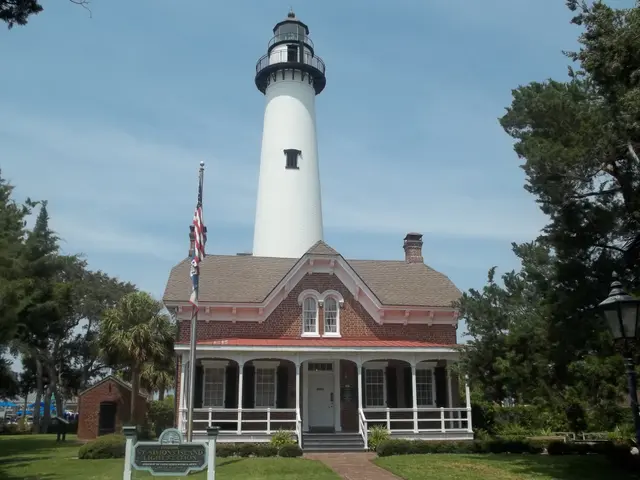
The present lighthouse was commissioned by the U.S. Government in 1867 beside the site of an 1810 tower, and its 104-foot tower and keeper's dwelling were designed by architect Charles Clusky, who died of malaria with several crew members during construction before the light and dwelling were completed in 1872. The brick lighthouse is cylindrical, with a 129-step cast-iron spiral staircase and a foundation 8 feet below ground, 30 feet in diameter, and 3 feet thick. In 1890, a fireproof oil house was built to hold 450 five-gallon containers of kerosene for the lamp in the lantern room, and later large oil drums were installed there to store fuel. Several keepers and assistants served at the station, including C.O. Svendsen, and the keeper's wife often acted as assistant keeper. Before the lighthouse was fully automated in 1953, keepers led lonely and monotonous lives, keeping the light burning from sunset to sunrise and maintaining the lens, barns, boat houses, residence, and grounds. The position was highly prized, paid $400 to $600 per year in the 19th century, required literacy, and often passed from fathers and grandfathers to sons in the United States Lighthouse Service.
Hear stories like this as you drive
ExploreHere reads historical markers out loud as you pass them: over 325,000 stories across the US. No account needed.
4.7 · 800+ ratings · Free
FIND IT
St. Simons, Georgia · United States