Faith
3
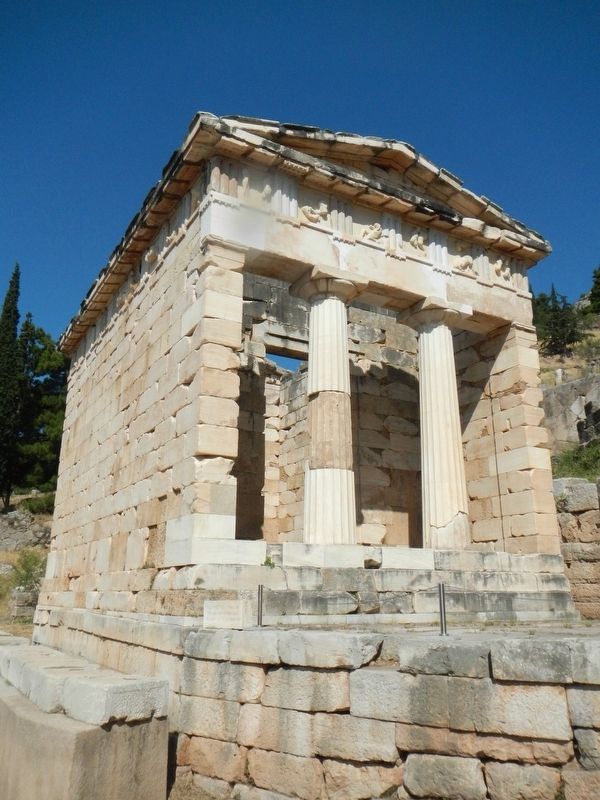
The Sanctuary of Apollo occupied a steep slope at the base of the western Phaedriada, today called Rodine, 1500 m. northwest of the Sanctuary of Athenia Pronaia. It is believed that Ge, or Earth, the sanctuary's first divinity, was originally worshipped there, and this worship may be connected with Mycenaean building remains found north of the temple of Apollo. The sanctuary's true flowering and Panhellenic recognition were linked to the arrival of the cult of Apollo and to the oracle's role during the second period of colonization in the 8th c. B.C., and Homer referred to Delphi as a place of great wealth. The site was enclosed by a built wall with entrance gates on the east and west, while the city of Delphi extended into parts of the area. The precinct was gradually shaped on different levels through support walls that leveled the ground and created space for many votive offerings. The first stone temple of Apollo and most of the treasuries, small temple-shaped buildings that housed votives dedicated by cities in memory of military victories and noble deeds, were erected in the 6th c. B.C., including the Treasury of the Siphnians, the restored Treasury of the Athenians, and the treasuries of the Corinthians, Megarians, and Boeotians. The Temple of Apollo and the Sacred Way formed the main nuclei of the precinct's arrangement, with the Sacred Way beginning at the main entrance in the southeast corner of the enclosure, winding upward, and ending at the temple before the large altar, a Chiot votive. Over time, hundreds of valuable votives lined the road, including statues of gods and mortals, tripods, and other works of art set on inscribed bases, columns, and stelae, giving the precinct the character of a unique open-air museum even in antiquity. Only a few of these survive today, and knowledge of them comes from preserved inscriptions and from ancient authors such as the 2nd. c. A.D. traveler Pausanias, who gave a detailed description of the sanctuary. The enclosure wall extended northward to include the theater in the northwest corner on steeply sloping ground. Near the north enclosure wall stood the Lesche of the Knidians, whose paintings by the 5th c. B.C. artist Polygnotus showed the Fall of Troy to the right of the entrance and Odysseus' descent into Hades, the Nekyia, to the left. Outside the enclosure, a small ascending path led toward the city's ancient Stadium about 500 m. beyond the sanctuary. Delphi was excavated in the late 19th century by the French Archaeological School and is listed as a UNESCO-protected World Heritage Monument.
PHOTOS
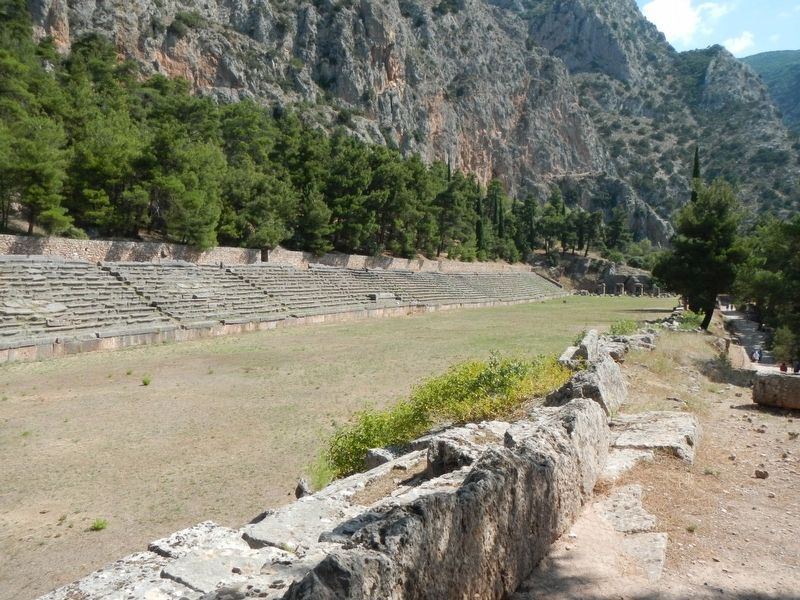
Photo: Barry Swackhamer
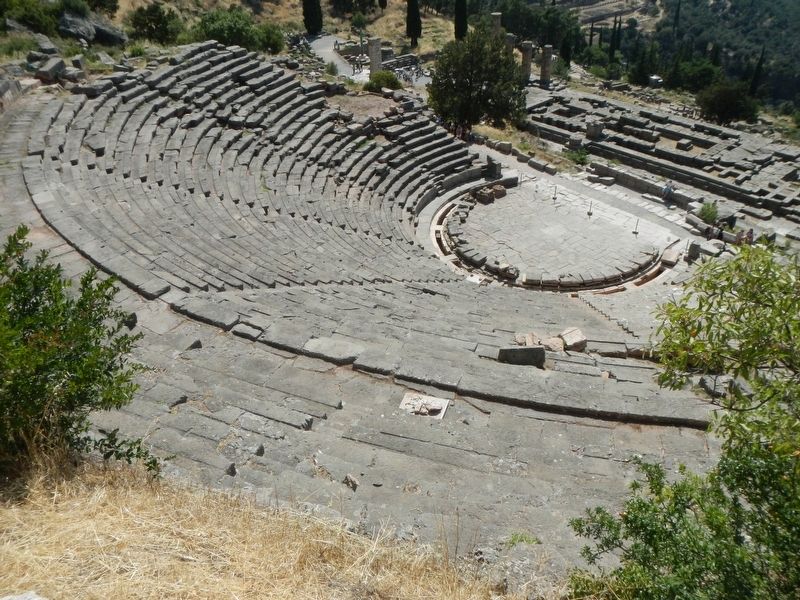
Photo: Barry Swackhamer
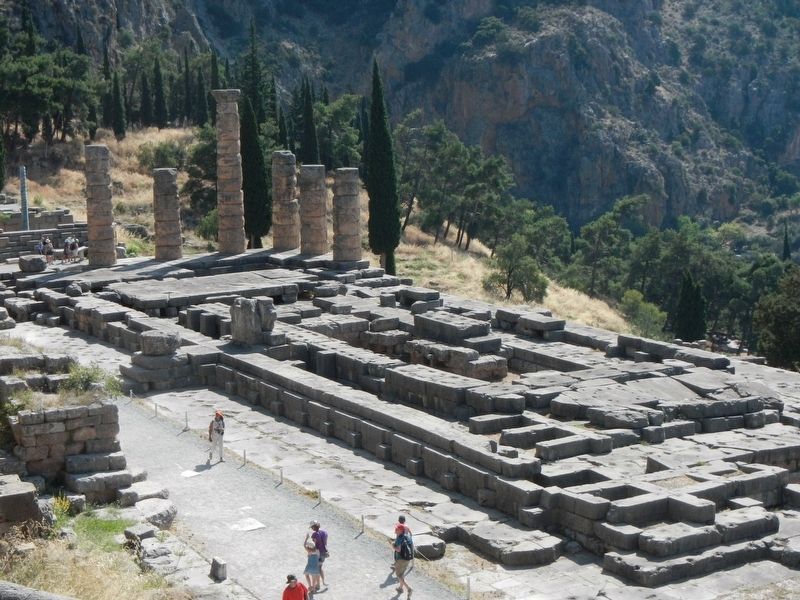
Photo: Barry Swackhamer
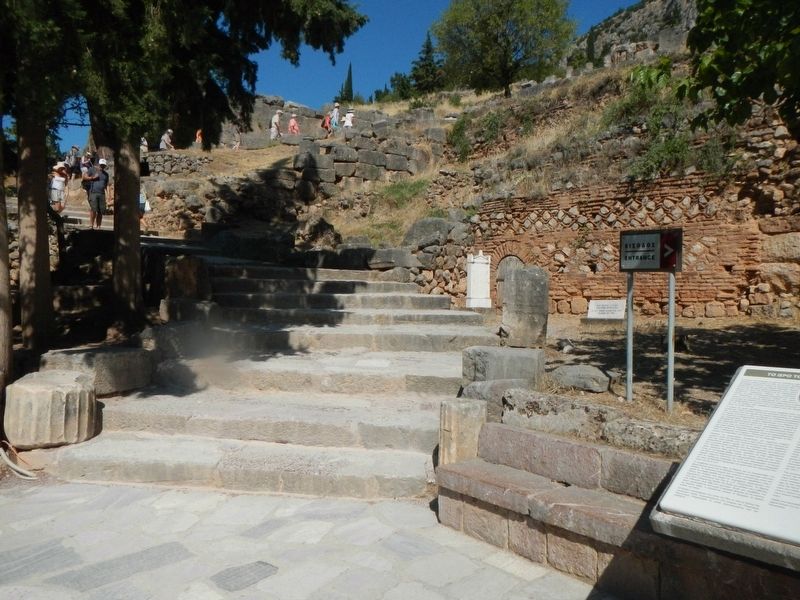
Photo: Barry Swackhamer
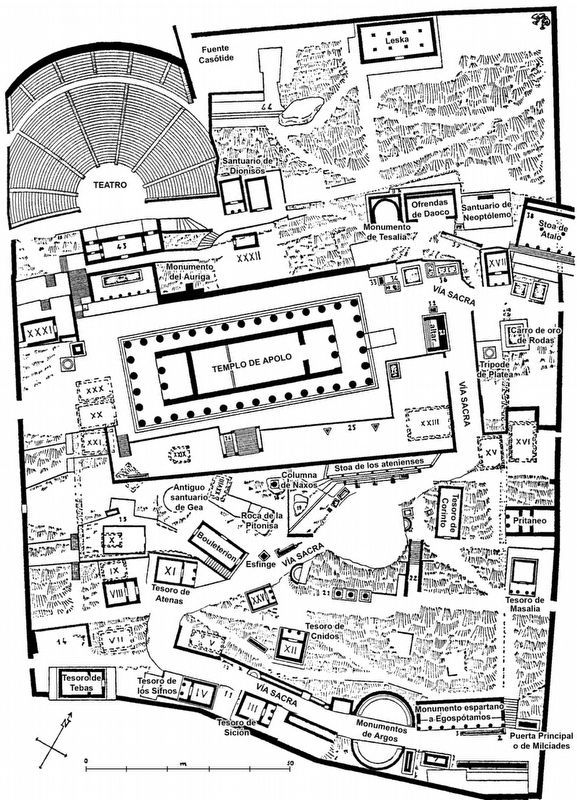
Photo: Wikipedia
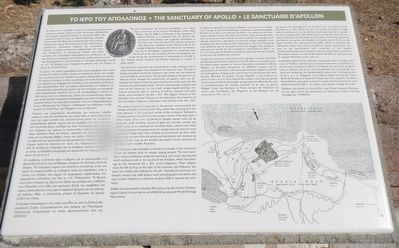
Photo: Barry Swackhamer
FIND IT
NEARBY MARKERS
© 2026 MainEngine