History
6
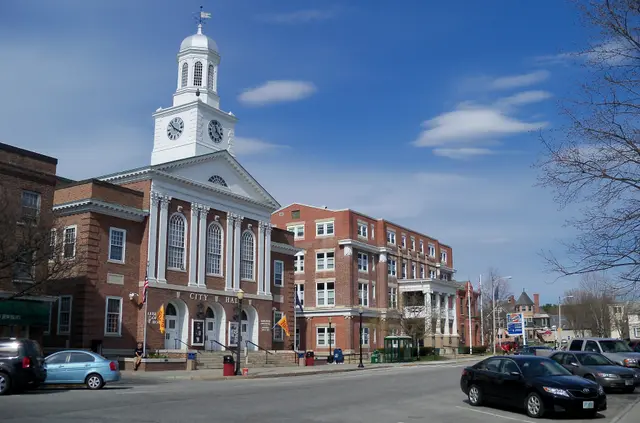
Before the arrival of European settlers, the area that is now Colburn Park was part of a flat, pine-covered expanse formed by the ancient confluence of the Mascoma River and Mink Brook. With the early settlement of the town of Lebanon, John Wheatley was engaged as the first schoolmaster and received a grant of nearly 200 acres, part of which included the future park. He cleared the land and built the first residence in the center of town, on a site now occupied by the Carter Mansion on the easterly side of Colburn Park. Wheatley’s daughter Lucinda married Robert Colburn and inherited her father’s property, which passed to her husband because married women could not own property at that time. In 1792, the town meeting was held in Colburn’s barn, and to settle a 20-year debate over where to build a new meetinghouse, Colburn marched the assembly to his large wheat field and offered the land if the town would build there. The town accepted and paid him to secure clear title. In 1804, the Fourth New Hampshire Turnpike was laid out in front of the new meetinghouse from east to west, and the Croydon Turnpike crossed it from southeast to northwest. In 1839, the town voted to move the meetinghouse from The Plain, as the area was then called, to the modern-day site of Lebanon City Hall, and the remaining grassland around the crossing of the two turnpikes was used to pasture cattle and horses as homes began to rise around the common. In 1849, the state rerouted the turnpikes around the common and eliminated the crossing, after which the town graded and fenced the common, with much of the original fence still remaining. In 1884, the town named the common Colburn Park in honor of Robert Colburn, whose selection of the meetinghouse site helped create Lebanon’s village green.
Hear stories like this as you drive
ExploreHere reads historical markers out loud as you pass them: over 325,000 stories across the US. No account needed.
4.7 · 800+ ratings · Free
FIND IT
Lebanon, New Hampshire · United States