History
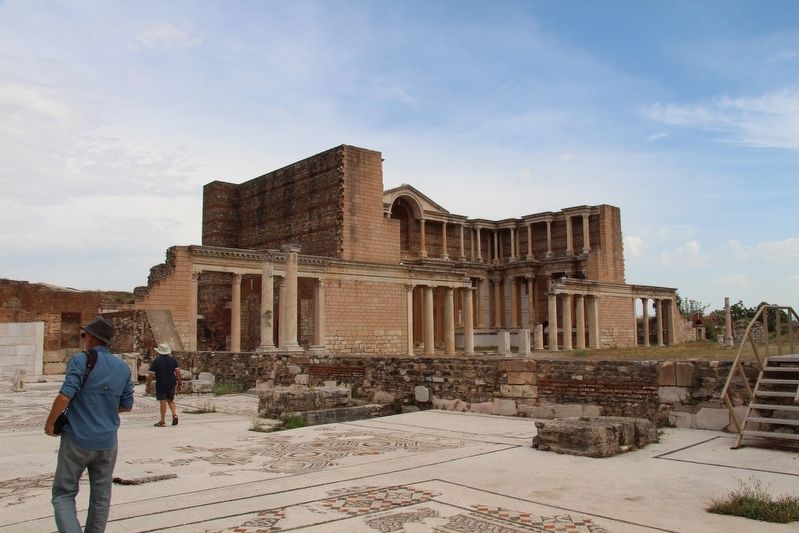
Sardis, known for more than 3,000 years by related names in Greek, Lydian, Persian, and Turkish, was first occupied in the Late Bronze Age around 1400 BC and flourished chiefly from the 7th century BC to the 7th century AD. Positioned on a natural route from the Aegean coast to central Anatolia, it benefited from fertile land on the Hermus river plain, mountain forests and yaylas, neighboring streams, a strong natural citadel, and, in the 7th and 6th centuries BC, alluvial gold from the Pactolus stream. These resources made the Lydians of Sardis the wealthiest and most powerful people in Anatolia, and under kings such as Gyges, Alyattes, and Croesus they built an empire stretching across most of western Anatolia to the Halys river. The royal burial mounds at Bin Tepe, 7 kilometers north of the city, reflect this wealth and power. After the Persian conquest of Anatolia about 547 BC, Sardis became the seat of a satrap and the chief Persian administrative center in western Anatolia. Following Alexander the Great's conquests in 334 BC, the city became increasingly Hellenized and gained civic monuments including the temple of Artemis and the theater. In the 1st through 4th centuries AD, it was a Greco-Roman metropolis with public baths and a stadium, and in the Late Roman period from the 4th through 7th centuries AD it reached its final great phase, from which many of the prominent ruins date. Afterward the settlement declined in size and population, and by the 18th and 19th centuries it had shrunk to one or two small hamlets. The modern town of Sart developed after the War of Independence in 1919-1922, and archaeological excavation was conducted in 1910-1914 and 1922 by the American Society for the Excavation of Sardis under Professor Howard Crosby Butler of Princeton University, and since 1958 by the Archaeological Exploration of Sardis founded by George M. A. Hanfmann of Harvard University.
PHOTOS
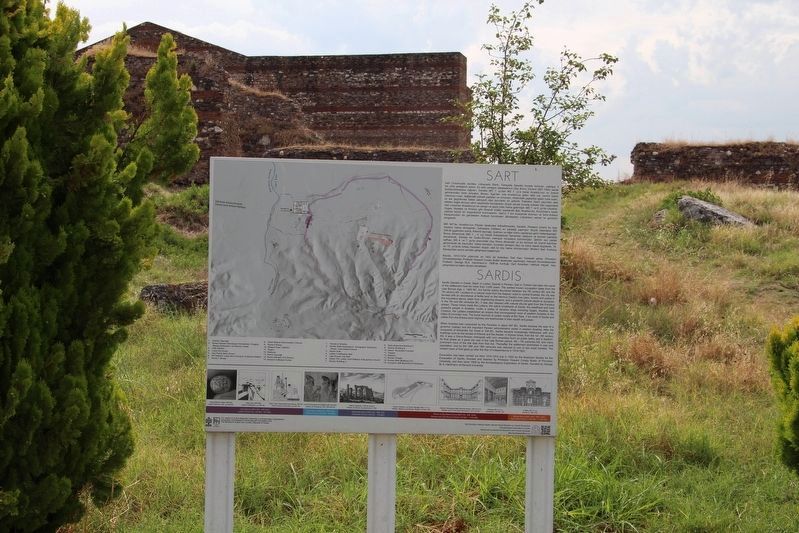
Photo: Dale K. Benington
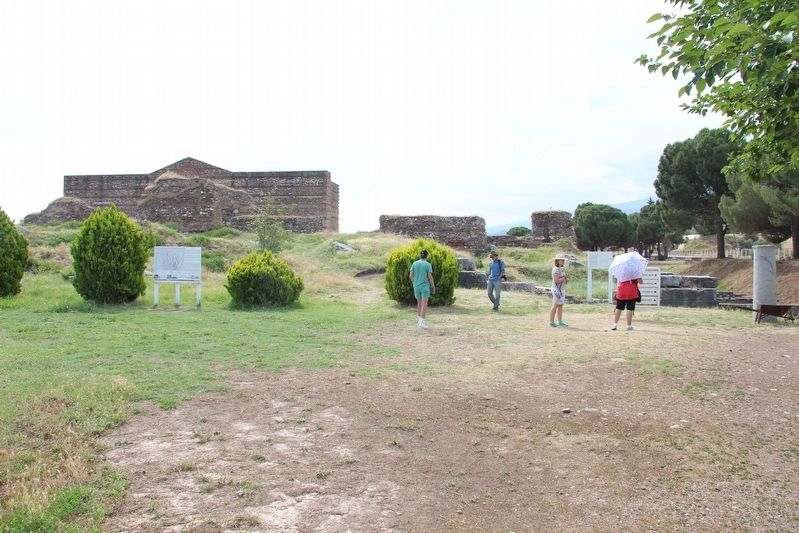
Photo: Dale K. Benington
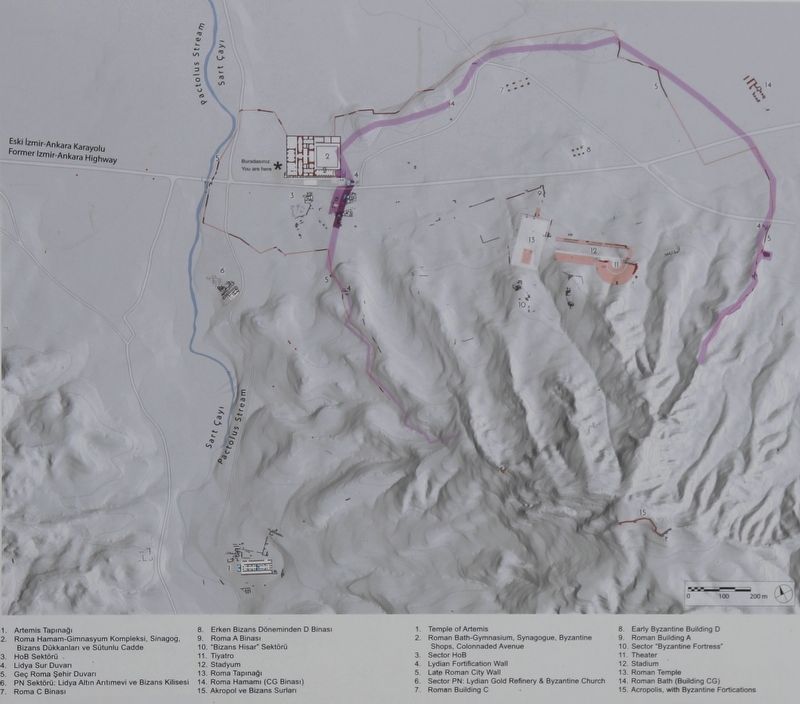
Photo: Dale K. Benington
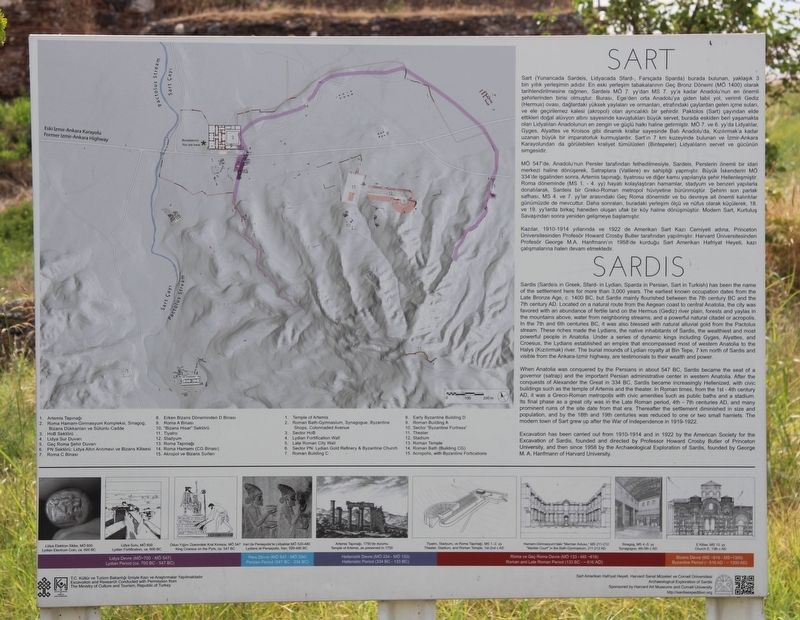
Photo: Dale K. Benington
FIND IT
NEARBY MARKERS
© 2026 MainEngine