Faith
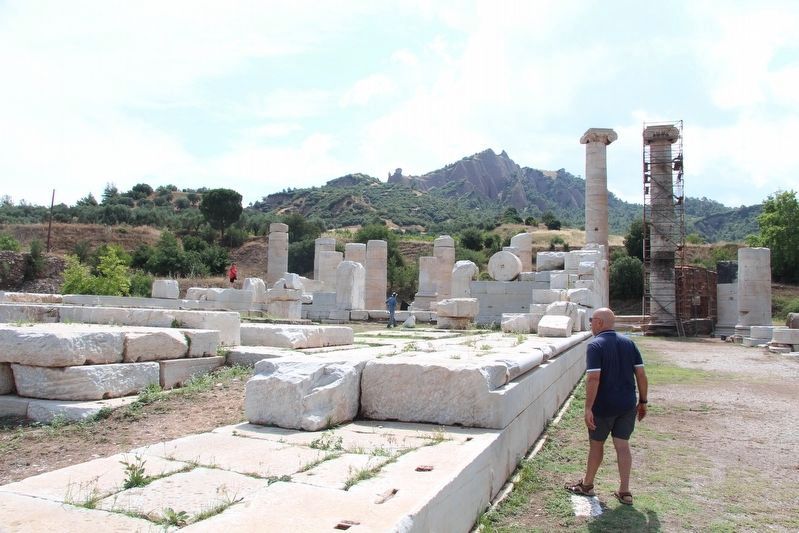
Originally dedicated to Artemis, this west-facing temple was one of the largest in the world, and its two complete columns have stood intact since antiquity without restoration. No temple from the Persian era survives, but a sanctuary of Artemis existed here, where Lydian inscriptions mentioning her cult and other remains from that era were found, and the oldest preserved monument in the sanctuary is probably an early altar dating to the late sixth or fifth century BC. The temple itself was begun in the Hellenistic era in the third century BC, when only the main building, or cella, was constructed with a roof supported by two rows of interior columns, while the surrounding exterior colonnade was apparently planned but not started. In the Imperial Roman era, probably in the first or second century AD, the cella was divided into two equal chambers by a cross wall and given a new east doorway, perhaps to accommodate the cult of the imperial family alongside that of Artemis; the interior columns were removed, statues 8.5 meters high of emperors and their wives were placed in the cella, and work began on an exterior colonnade on the east, with columns there erected but never finished, foundations laid along the north and south sides, and no columns begun on the west. Four fluted columns raised on pedestals, two at each end, were probably reused from the Hellenistic cella because they were shorter than the other planned exterior columns. After Christianity gained official recognition in the fourth century AD, pagan sanctuaries were closed, though the building probably remained in use; a small church was built at the east end in the fifth century AD, and crosses and the Christian slogans "light" and "life" were incised on the east doorway. From the seventh century onward the building fell into disrepair, and many stones were reused or burned for lime, before excavations in 1750, 1882, and 1904 and full exposure between 1910 and 1914 by the Howard Crosby Butler expedition.
PHOTOS
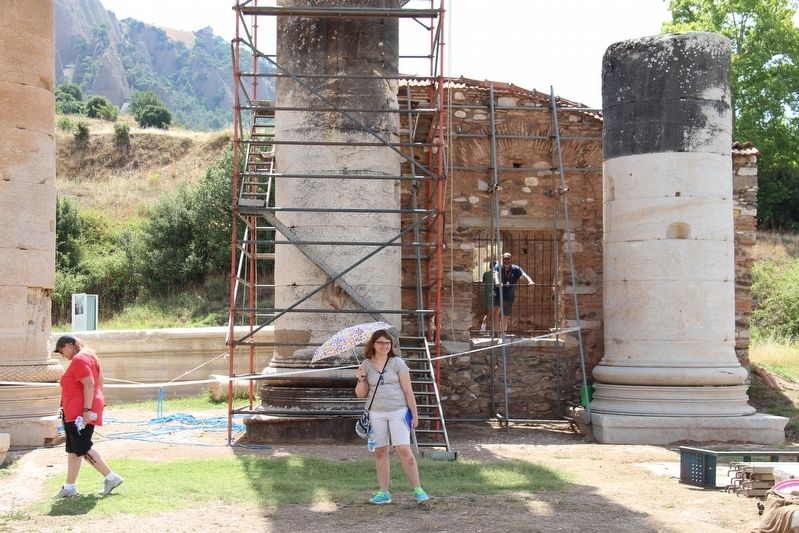
Photo: Dale K. Benington
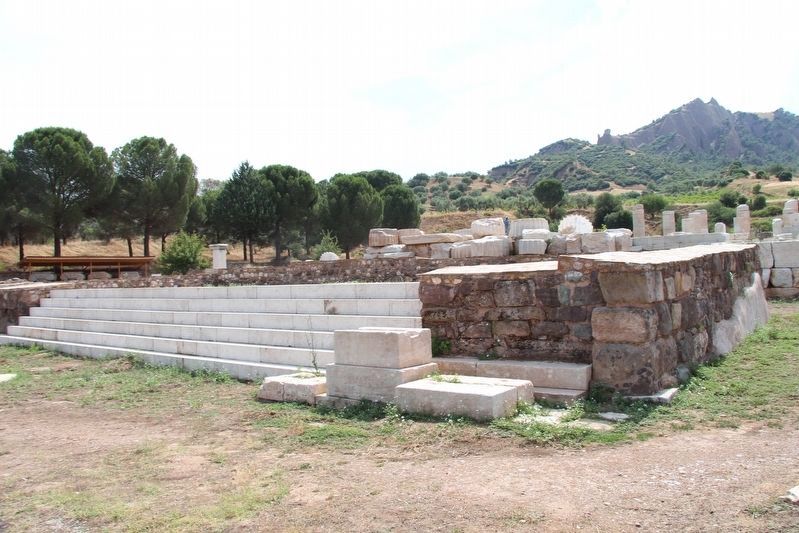
Photo: Dale K. Benington
Photo: Dale K. Benington
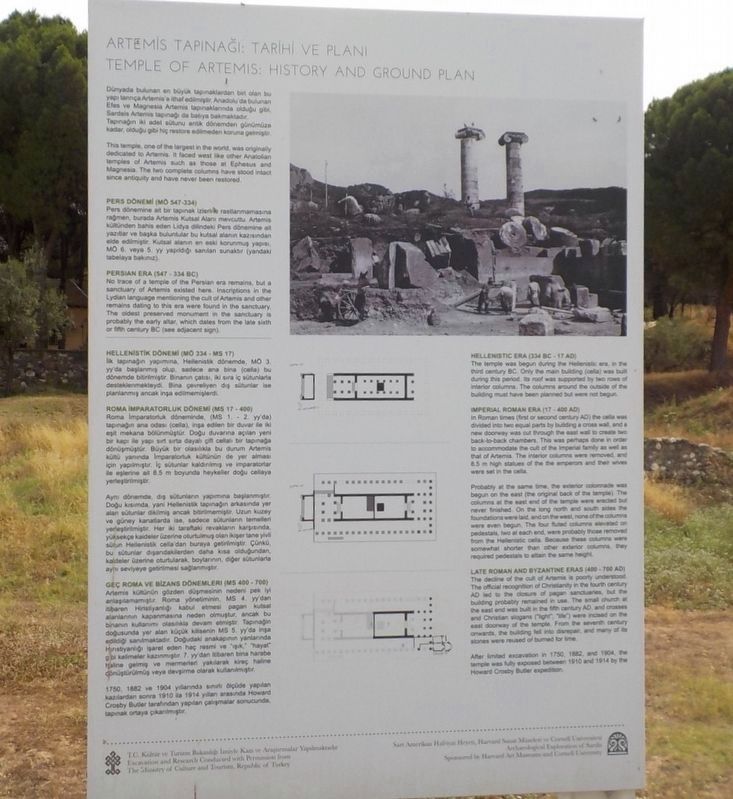
Photo: Pam Benington
FIND IT
NEARBY MARKERS
© 2026 MainEngine