History
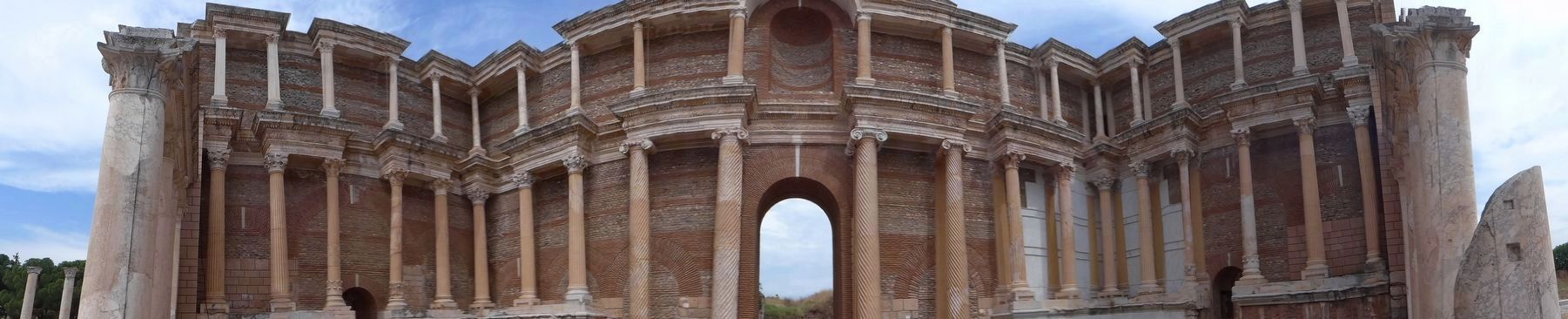
Bathing formed an important Roman social tradition that spread throughout the Roman Empire, emphasizing leisure and combining bathing in tepid, warm, and cold water with conversation, exercise, and intellectual pursuits. At Sardis, this complex was one of at least two monumental bath buildings in the city and covered 23,000 square meters. It belonged to a fairly standardized type of imperial bath known in other cities of Asia Minor such as Ephesus and throughout the Roman Empire. Its rooms and halls were symmetrically arranged, with pools of hot and cold water, the caldarium and frigidarium, on the central axis. The eastern half was an open court, or palaestra, for exercise and ceremonies, while the western half was the bath unit, made up of many large halls covered by vaults. The two-story colonnaded Marble Court was originally separate from the baths and was used for special ceremonies. An inscription on the first story dedicated this space to the Roman Imperial family—Emperors Caracalla and Geta, and their mother Julia Domna—and recorded that the hall was gilded by two ladies of consular rank; the sarcophagus of one of them, Claudia Antonina Sabina, was found at Sardis and is in the Istanbul Archaeological Museum. The complex was probably completed in the late 2nd or early 3rd century AD, was repaired and modified in succeeding centuries, including the conversion of one of its halls into a Synagogue, and fell into ruin in the 7th century AD.
PHOTOS
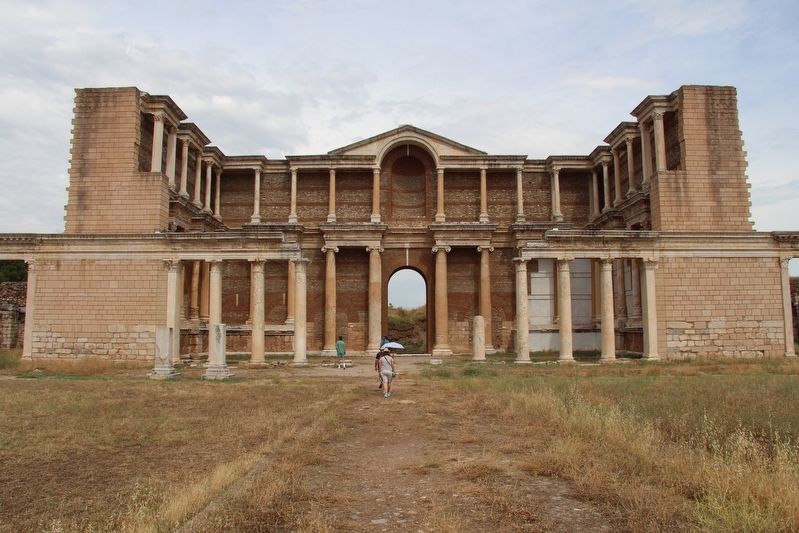
Photo: Dale K. Benington
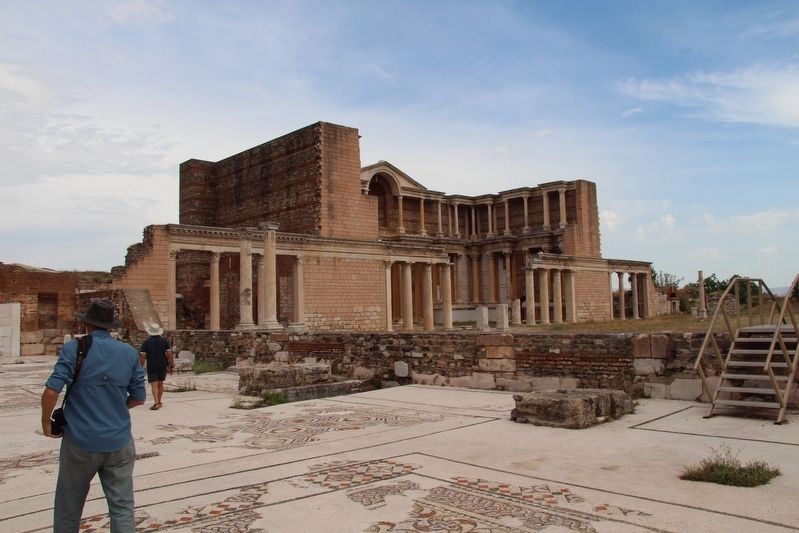
Photo: Dale K. Benington
Photo: Dale K. Benington
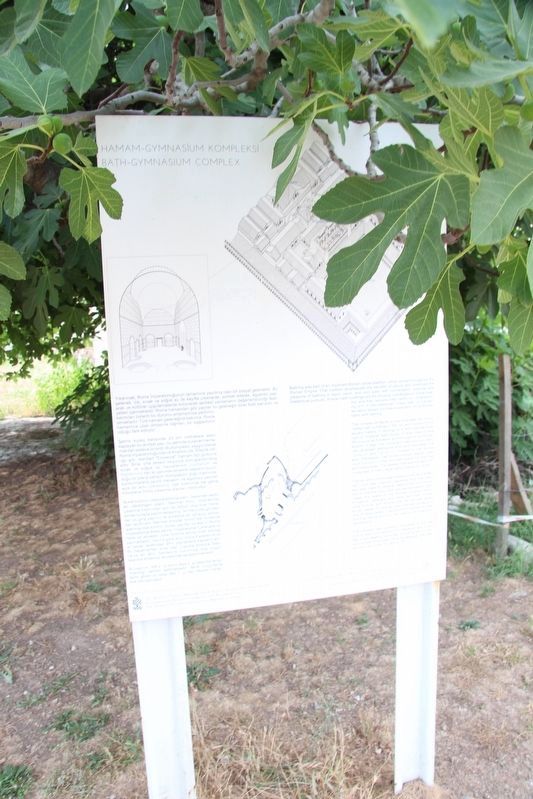
Photo: Dale K. Benington
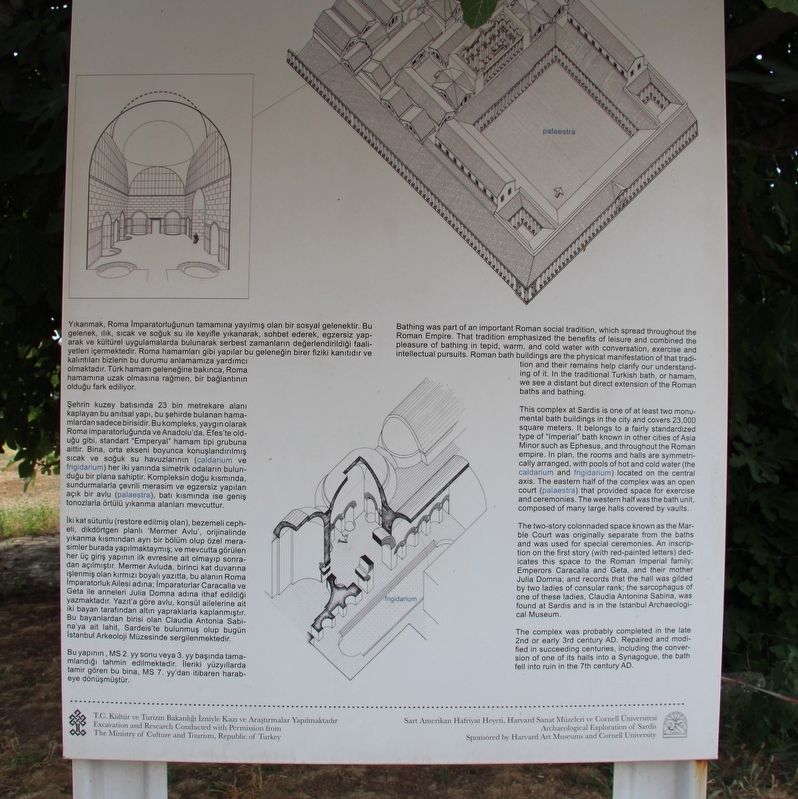
Photo: Dale K. Benington
FIND IT
NEARBY MARKERS
© 2026 MainEngine